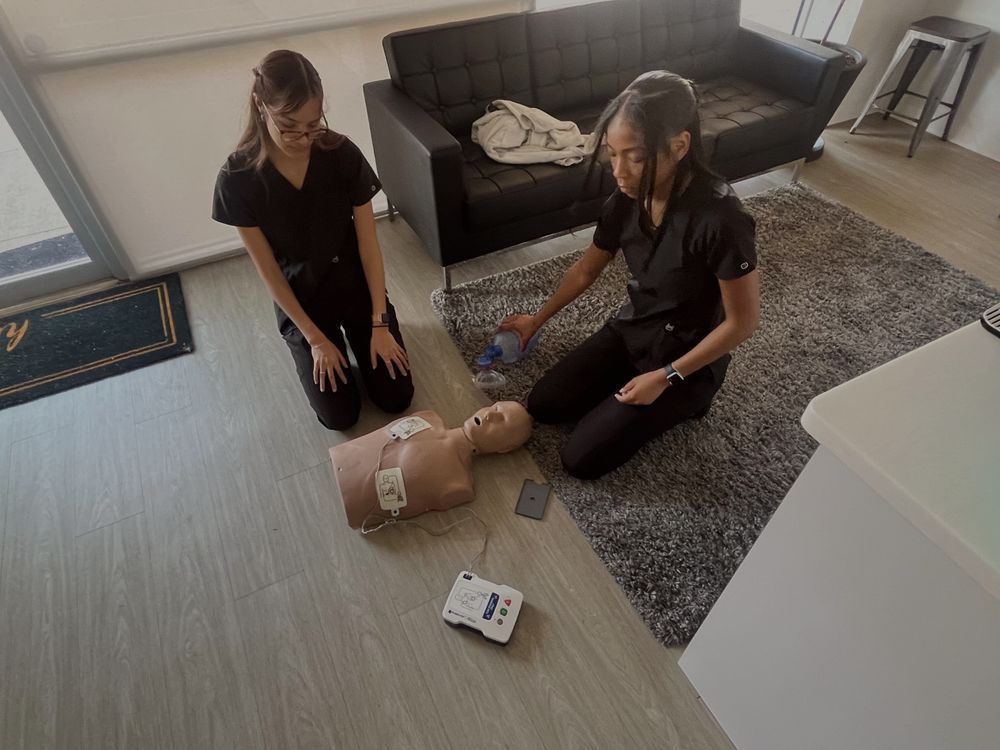
Medical Assistant Training to Career: The Complete Path from Enrollment to Advancement

Medical assistant training is the starting point — but the career that follows is where it gets interesting. Most people focus on what happens during training (which matters), but the path from enrollment to certification to employment to advancement is the full picture worth understanding.
Here’s the complete journey, step by step — so you know exactly what you’re working toward.
Step 1: Choose a training program
Not all programs are equal. The factors that matter most:
- Hands-on clinical training — you need supervised practice with real equipment, not just lectures
- Certification preparation — CCMA exam prep should be integrated, not optional
- Timeline — accelerated programs (12–18 weeks) get you working faster without cutting corners
- Cost — programs under $6,000 with payment plans let you graduate debt-free
- No prerequisites required — the best programs welcome complete beginners
Wichita Falls Medical Assistant School checks all of these boxes — training designed for career changers and beginners, with certification preparation built in.
Step 2: Complete your training
During training, you’ll build every skill medical offices expect from day-one employees:
Clinical skills
- Phlebotomy — venipuncture technique, specimen labeling, patient management
- Vital signs — blood pressure, pulse, respiration, temperature, oxygen saturation
- Injections — intramuscular, subcutaneous, intradermal technique and documentation
- EKG — lead placement, artifact recognition, clean tracings
- Specimen collection — urine, throat swabs, wound cultures, lab processing
- Wound care — cleaning, irrigation, dressing, suture removal assistance
- Patient intake — rooming patients, medical histories, chief complaint documentation
Administrative skills
- Electronic health records (EHR) documentation
- Appointment scheduling and patient flow management
- Insurance verification and billing code basics (CPT, ICD-10)
- Phone triage and message relay
- HIPAA compliance across all communications
Professional development
- Medical terminology and anatomy
- Patient communication and de-escalation
- Time management in fast-paced clinical environments
- Interview preparation and resume building
Step 3: Earn your certification
After completing training, you’ll sit for the CCMA (Certified Clinical Medical Assistant) exam through the National Healthcareer Association. This credential:
- Verifies your clinical competency to employers
- Increases your starting salary by approximately $2,000–$5,000/year
- Opens doors to positions that require certification
- Gives you credibility and negotiating power from day one
Wichita Falls Medical Assistant School integrates CCMA exam prep throughout the program, so by graduation you’ve already been studying for weeks — not cramming for days.
Step 4: Land your first job
The medical assistant job market in 2026 is strong:
- BLS projects 15% employment growth through 2032 — much faster than average
- Medical offices, clinics, urgent care centers, and hospitals near Wichita Falls are consistently hiring
- Certified MAs with hands-on training are the candidates employers prioritize
Where to look
- Job boards — Indeed, ZipRecruiter, LinkedIn, healthcare-specific sites
- Medical office websites — individual practices and healthcare groups post directly
- Staffing agencies — some specialize in medical and healthcare placements
- Training connections — clinical sites and instructors often have employer networks
- School career support — job search guidance, resume help, interview coaching
What employers look for
- CCMA certification (or exam-ready status)
- Hands-on clinical skills — phlebotomy, vitals, injections, EKGs
- EHR proficiency
- Strong communication and professionalism
- Reliability and a positive attitude
Most graduates find positions within 2–4 weeks of completing certification.
Step 5: Build your career
Your first medical assistant position is the foundation — not the ceiling. Here’s where the career can take you:
Years 1–2: Building expertise
- Master clinical workflows and develop efficiency
- Build relationships with providers and colleagues
- Earn consistent raises as you prove reliability and competence
- Consider specializing based on what interests you most
Years 2–5: Advancing
- Lead or senior MA — managing the clinical team, training new hires, higher pay
- Specialty practice — cardiology, dermatology, orthopedics, pediatrics, OB/GYN (often $3,000–$8,000/year more)
- Clinical coordinator — managing patient flow, quality metrics, and staff scheduling
- Expanded skills — additional certifications in phlebotomy, EKG technology, or medical coding
Years 5+: Leadership and beyond
- Office manager — transitioning into full practice administration
- Healthcare administration — using MA experience as a foundation for management roles
- Further education — nursing, physician assistant, health information management
- Training and education — teaching the next generation of medical assistants
The salary trajectory
- Entry-level (year 1): approximately $32,000–$38,000/year
- Mid-career (years 2–5): approximately $42,000–$50,000/year
- Experienced / specialty / lead (years 5+): $48,000–$55,000+/year
- Office management: $50,000–$65,000+/year
Pay increases with certification, experience, specialization, and leadership responsibility.
The complete timeline
| Phase | Duration |
|---|---|
| Research and enrollment | A few days to 1 week |
| Training | 12–18 weeks |
| Certification exam | 1–3 weeks post-graduation |
| Job search | 2–4 weeks |
| Total: enrollment to employment | Approximately 4–6 months |
Four to six months from right now, you could be working in a medical office, earning a competitive salary, and building a career with real growth potential.
Where medical assistants work
One of the underappreciated aspects of this career is how many different settings you can work in:
- Primary care offices — the most common setting; general medicine, family practice, internal medicine
- Specialty clinics — cardiology, dermatology, orthopedics, OB/GYN, pediatrics, neurology (often higher pay)
- Urgent care centers — fast-paced, varied patient mix, often flexible scheduling
- Hospital outpatient departments — stable employment, benefits packages, structured advancement
- Community health centers — serving underserved populations, often mission-driven environments
- Telehealth support roles — a growing segment where MAs handle scheduling, intake, and follow-up
Each setting has its own pace, pay scale, and culture. Your training prepares you for all of them.
Why medical assisting is worth considering in 2026
- Healthcare jobs are among the most recession-resistant careers available
- Medical assistant demand is growing 15% — faster than nearly any other occupation
- Training is short, affordable, and accessible — no degree required
- The work is hands-on, varied, and genuinely meaningful
- Career advancement opportunities are real and well-documented
- You can start earning a competitive salary in months, not years
Common concerns about getting started
“Am I too old to start?” No. Medical assistant programs attract students from their late teens to their 50s. Career changers are the norm, not the exception.
“What if I’m squeamish about blood?” Most people who feel this way initially find that proper training and controlled exposure make it manageable. Instructors are experienced at guiding students through this transition.
“Is the job stressful?” Medical offices are busy, but the work is predictable. Unlike emergency medicine, most MA positions operate on regular business hours with manageable patient volumes.
The salary trajectory in detail
Your earnings grow predictably with experience, certification, and specialization:
Year 1 (entry-level, newly certified):
- $32,000–$38,000/year in most markets
- Your focus: build efficiency, earn trust, get comfortable in the role
Years 2–3 (established, reliable):
- $40,000–$48,000/year as raises compound
- Opportunity to specialize or take on lead responsibilities
Years 4–5 (experienced, possibly specialized):
- $46,000–$55,000+ in specialty practices or lead roles
- Career advancement to coordinator or management roles becomes realistic
Years 5+ (leadership or further education):
- Office management: $50,000–$65,000+
- Clinical coordinator: $48,000–$62,000
- Nursing or PA programs, if you choose to advance academically
Starting sooner means this entire progression begins earlier — which compounds over a full career.
Start your path at Wichita Falls Medical Assistant School
Medical assistant training is the first step. Wichita Falls Medical Assistant School provides the clinical skills, certification preparation, and career support to make every step after that count.
- See the program: Program details
- Review tuition and payment options: Tuition
- Talk to our team: Contact
- Apply: How to apply
You're only a few months from the medical assistant career you deserve.